
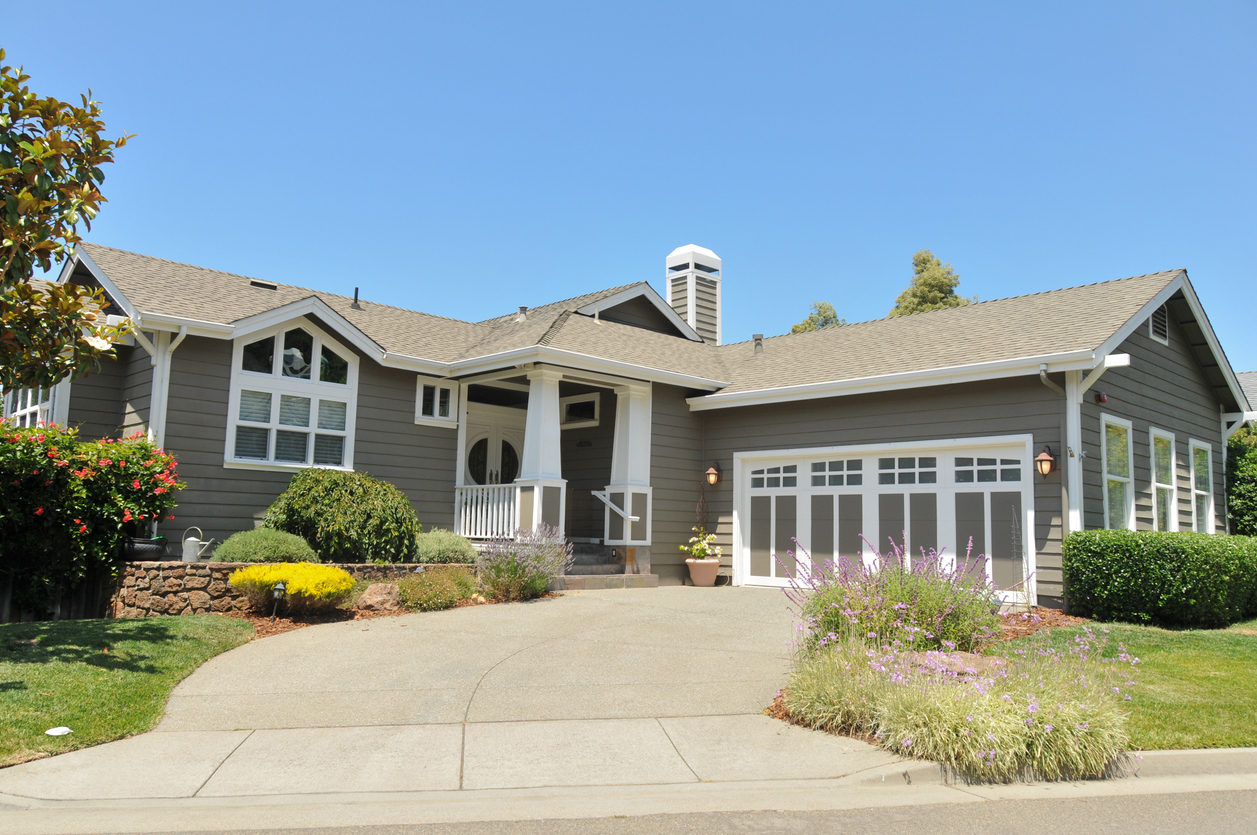
September is an interesting month for exterior painting in Portland.
The house may look fine. There may be no dramatic peeling, no obvious water damage, and no single problem demanding immediate attention.
But summer has just finished putting the exterior through months of stress.
Long days of direct sun have heated siding and trim. Wood has dried. Caulking has expanded and contracted. Deck surfaces have taken months of UV exposure and foot traffic. South- and west-facing walls may have aged noticeably faster than shaded portions of the same house.
Then September arrives.
The days get shorter. Overnight temperatures begin dropping. Morning moisture becomes more noticeable. Before long, the surfaces that spent summer getting hot and dry will be dealing with months of Oregon rain.
That transition makes September one of the most revealing times to actually look at your house.
The Damage You Notice in September Often Started in July
Exterior paint rarely goes from healthy to failing in a single week.
Instead, deterioration happens gradually.
UV radiation breaks down the coating. Heat affects flexibility. Existing cracks widen slightly. Caulking that was already aging becomes harder and more brittle.
You may not notice any of it while it’s happening.
Then one September afternoon, the sun hits the house differently and suddenly you see it.
One wall looks noticeably duller.
The trim around a window has developed a thin crack.
There’s a small patch of exposed wood near the fascia.
Run your hand across the siding and a powdery residue comes off on your fingers.
These aren’t random September problems.
They’re often the evidence summer left behind.
One Wall Can Tell Us More Than the Whole House
When we evaluate a Portland home, we’re interested in differences.
If every side of the house looked and behaved exactly the same, exterior inspections would be easy.
They rarely do.
Consider a home in Alameda with a west-facing elevation that receives direct afternoon sun.
That wall can spend summer absorbing significantly more solar exposure than the shaded side of the property. Over time, you may see stronger fading, chalking, and deterioration around joints.
Drive south toward Eastmoreland and the situation can change. Mature tree cover may reduce some direct sun exposure while creating areas where siding dries more slowly once wet weather returns.
Neither situation automatically means the house needs immediate repainting.
The contrast simply gives us clues about where the coating is under the most stress.
That’s why professional residential exterior painting begins with looking at the house as a collection of different exposures rather than one uniform surface.
The Gap Around Your Window Wasn’t Always That Big
September is also a good time to look at caulking.
Caulk is easy to forget because it occupies such a small part of the exterior. But those narrow lines around windows, doors, trim, and siding transitions perform an important job.
After repeated heating and cooling, aging caulk can begin to:
- shrink
- crack
- separate
- lose flexibility
A tiny separation may not seem urgent on a dry September afternoon.
Think about the same opening after several weeks of wind-driven rain.
That’s why we pay close attention to joints before Portland enters its wetter months.
Painting over failed caulking doesn’t fix the underlying vulnerability. It needs to be identified and properly prepared first.
Summer Can Be Harder on Dark Paint
Dark exterior colors have become popular, and they can look striking on Portland homes.
They also absorb more heat.
On surfaces receiving strong direct sunlight, darker colors can reach substantially higher surface temperatures than lighter finishes. That repeated heating and cooling places additional stress on siding, trim, sealants, and coatings.
This doesn’t mean homeowners shouldn’t choose dark colors.
It means product selection, preparation, substrate condition, and exposure become even more important.
A dark south-facing wall on an exposed property in Happy Valley isn’t living the same life as a light-colored wall shaded beneath trees in Northwest Portland.
Color is part of the performance equation, not just an aesthetic decision.
Your Deck Had an Even Rougher Summer
If you want an obvious example of summer weathering, walk onto your deck.
Decks receive exposure from above in a way vertical siding generally doesn’t.
They deal with:
- direct sunlight
- heat
- dirt
- food and drink spills
- patio furniture
- foot traffic
- occasional irrigation or water exposure
By September, an unprotected or aging deck may feel noticeably rougher than it did in spring.
Look for gray wood, faded stain, splintering, or areas that absorb water quickly rather than allowing it to bead.
If the protective finish is wearing thin, deck and porch refinishing can help restore the surface before prolonged wet weather begins.
The important thing is not whether the deck still looks presentable from the kitchen window.
It’s whether the wood is still adequately protected.
September Changes the Question
In June, a homeowner might ask:
“How does my house look?”
In September, we think a better question is:
“What’s ready for the rain?”
Those aren’t quite the same thing.
A faded wall can still be performing adequately.
A good-looking section of trim with a failed joint may be vulnerable.
This is why painting should be treated as maintenance rather than purely decoration.
The purpose of a coating isn’t simply to provide color. It helps protect the material underneath.
This Is Also When Deferred Maintenance Shows Up
Summer tends to expose projects homeowners have been postponing.
Maybe you noticed a peeling fascia board while cleaning the yard.
Maybe the deck looks noticeably grayer.
Maybe the west side of the house doesn’t match the east anymore.
Maybe you’ve known for two years that the exterior was getting close but haven’t been sure whether it could wait.
September gives you an opportunity to make that decision before winter makes it for you.
And sometimes the answer really is that the house can wait.
A professional evaluation shouldn’t automatically result in a recommendation to repaint everything. If the coating is still sound, that’s useful information too.
But if vulnerable areas are already exposed, another prolonged wet season can change the scope of the eventual project.
Businesses Should Look at Their Buildings Now Too
Commercial properties go through the same seasonal transition.
Retail storefronts, offices, apartment buildings, and industrial properties may have spent summer dealing with direct sun on large exposed elevations.
By fall, deteriorating sealant, faded coatings, and localized paint failure become easier to identify.
Professional commercial exterior painting can address those conditions before winter weather adds another season of stress.
For a business, there is another consideration as well: appearance.
A tired exterior isn’t only a maintenance issue when customers, tenants, or clients see it every day.
Don’t Let an Online Painting Schedule Decide for You
You’ll find plenty of advice online telling you how often a house “should” be painted.
Seven years.
Ten years.
Sometimes longer.
Those numbers can be useful as broad references, but they don’t know anything about your property.
They don’t know whether your west wall gets uninterrupted afternoon sun.
They don’t know whether trees shade the north elevation.
They don’t know whether the last painter prepared the siding properly.
They don’t know whether your caulking is intact.
And they definitely don’t know what another Portland winter will be asking that exterior to withstand.
The house itself is a better source of information.
Take a Walk Around Your Home Before the Rain Does
You don’t need to be a painter to perform a useful September check.
Look closely instead of simply looking from the street.
Pay particular attention to the sides of the home that receive the most sun and the areas that stay shaded. Examine window trim and joints. Look underneath eaves. Check the lower siding near landscaping. Walk across the deck.
If something looks different than it did last year, that’s worth understanding.
You can learn more about North West Painting and our approach to residential and commercial painting throughout Portland and the surrounding communities.
If you’re unsure whether the wear you’re seeing is normal or a sign that it’s time to repaint, contact North West Painting for a free quote.
We offer competitive pricing based on the actual condition of your property, not an online average.
Summer has already given your exterior its test.
September is when you get to see the results.