
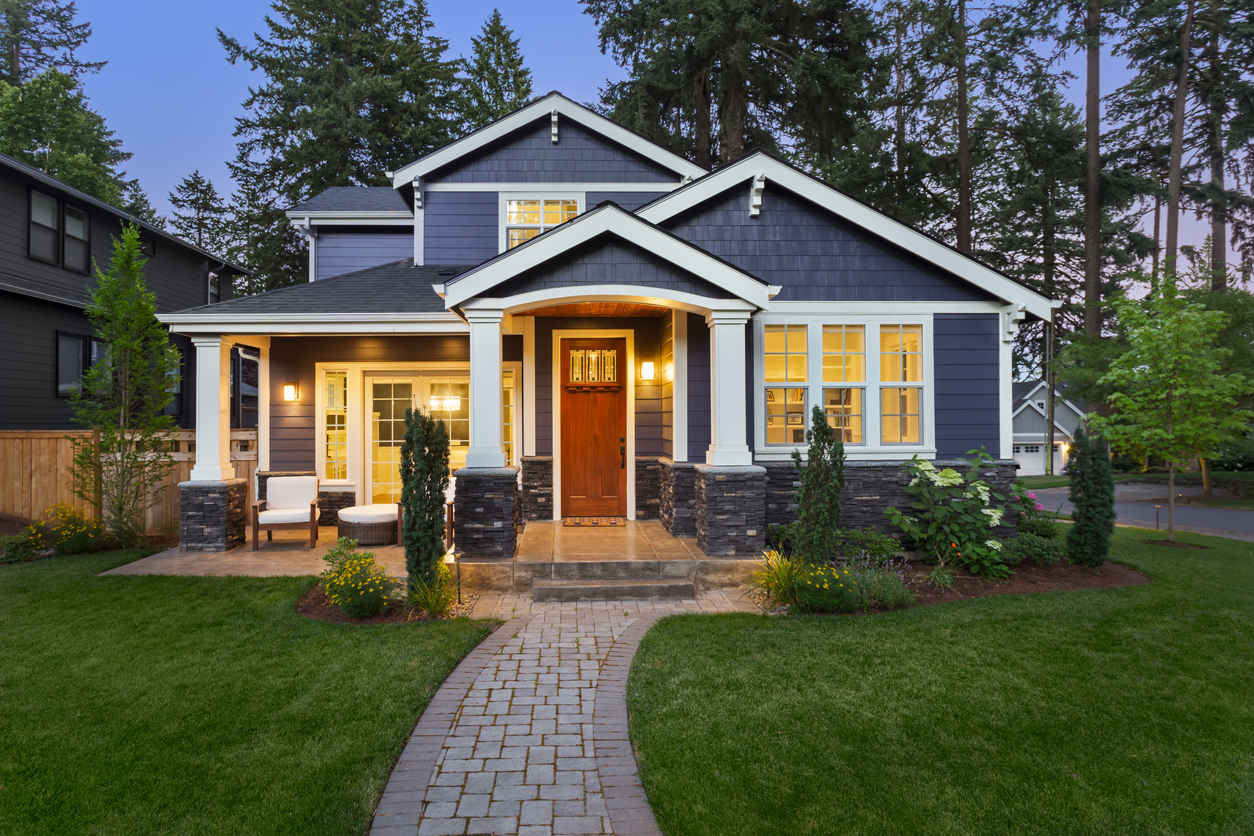
There is one piece of painting advice that sounds completely reasonable and causes homeowners to wait too long:
“If the paint still looks good, the house doesn’t need painting.”
We understand why people think this way.
Exterior painting is visual. Homeowners notice color first, so it seems logical to judge the condition of a paint job by whether the house still looks attractive from the street.
Unfortunately, appearance and protection aren’t the same thing.
A house can still have good color while caulking is separating around windows. Shaded siding can look almost new while retaining moisture longer than other elevations. A small section of trim can lose its protective coating while 95 percent of the exterior still looks perfectly acceptable.
This distinction becomes particularly important in Portland’s West Hills, where shade, elevation, tree cover, and exposure can create very different conditions on different parts of the same house.
The question isn’t simply whether your paint looks old.
It’s whether the exterior is still protected.
A Driveway Inspection Doesn’t Tell You Much
Here’s an easy trap to fall into.
You pull into the driveway every day and see the front of your house. The color looks reasonably consistent. Nothing appears dramatically wrong.
So painting gets pushed down the list.
Walk around the side of the house, though, and you may find something completely different.
Perhaps there’s a narrow elevation between the house and landscaping that receives little airflow.
Maybe paint beneath one window has started separating.
Perhaps the fascia above your normal sightline is peeling.
Or the rear of the house receives enough afternoon sun that its coating has aged much faster than the front.
That’s why we don’t evaluate a home from the curb.
Professional residential exterior painting starts with looking closely at the surfaces that homeowners don’t necessarily see every day.
The West Hills Make This Myth Particularly Risky
The West Hills provide a perfect example of why visual appearance alone isn’t enough.
Properties around Forest Heights, Sylvan, and the surrounding hillside areas can have dramatic differences in exposure within a single lot.
One elevation may sit beneath dense tree cover.
Another may be more open to wind and afternoon sun.
The uphill side of the property can have a very different relationship with surrounding vegetation and airflow than the downhill side.
A shaded wall may retain its color beautifully.
That doesn’t necessarily tell us how quickly it dries after extended wet weather.
Conversely, a sunny wall might look faded while remaining structurally sound.
We care about both, but for different reasons.
Fading Is Actually One of the Easier Problems to See
Homeowners tend to worry about faded paint because it’s obvious.
Some of the more important warning signs are much smaller.
Take caulking.
The bead of material where trim meets siding might represent only a tiny fraction of the exterior, yet its condition matters significantly.
When it starts:
- cracking
- shrinking
- hardening
- pulling away
the exterior has developed an opening where moisture may reach areas that should remain protected.
From twenty feet away, the house can still look excellent.
Up close, it is beginning to tell another story.
Look at the Edges, Not Just the Big Surfaces
If you want to perform a useful inspection yourself, spend less time staring at the middle of a wall.
Look at edges.
Look where:
- window trim meets siding
- siding meets corner boards
- trim pieces join
- fascia meets other materials
- painted surfaces terminate
Edges are where coatings and sealants often reveal stress first.
If everything is intact, that’s encouraging.
If you find small areas of exposed material or separation, you’ve identified something worth monitoring or addressing.
This is the kind of detail that helps determine whether a home is simply showing normal cosmetic aging or moving toward a more involved painting project.
Another Myth: Peeling Paint Is When You Know It’s Time
Peeling is certainly a clear sign that something needs attention.
But waiting for widespread peeling is like waiting for your tires to go flat before checking the tread.
By the time exterior paint is releasing extensively, the project may require considerably more preparation.
A better maintenance window is often earlier, when we’re seeing signs such as:
- widespread chalking
- deteriorating caulking
- isolated coating failure
- exposed edges
- significant uneven weathering
The goal isn’t to repaint prematurely.
It’s to avoid waiting until the protective system has failed across large areas.
More Trees Don’t Automatically Mean Better Protection
Shade seems like it should be good for exterior paint.
And in one respect, it can be.
Less direct UV exposure may reduce fading and some forms of sun-related deterioration.
But tree cover changes other things.
Shaded exterior surfaces can dry more slowly after rain. Branches and vegetation can limit airflow. Organic material can collect on siding, decks, and horizontal surfaces.
This is why heavily wooded Portland properties shouldn’t be evaluated according to the same assumptions as homes sitting in open sun.
The paint color may look fantastic.
We’re still going to inspect the shaded elevations closely.
Your Deck Makes the Myth Easier to Understand
Imagine a deck with stain that still has decent color.
Does that automatically mean the wood is protected?
No.
If water readily absorbs into the boards rather than resisting penetration, the finish may no longer be performing as intended even though some color remains.
That’s why deck and porch refinishing is about more than making old wood look attractive again.
Protection matters.
Your siding isn’t exactly the same as a deck, but the principle is useful: appearance is only one clue.
What Should You Do If Your House Still Looks Good?
First, don’t assume you need to repaint it.
That’s not the point.
Instead, take advantage of the fact that you’re evaluating the exterior before there’s an obvious problem.
Walk all four sides.
Check the trim.
Look underneath eaves.
Examine the caulking around windows and doors.
Compare exposed elevations with shaded ones.
Pay particular attention to places where vegetation sits close to the house.
If the coating is solid and the vulnerable areas are properly sealed, you may have plenty of useful life remaining.
That’s valuable information.
If you discover isolated problems, you have an opportunity to address them before another Portland wet season adds stress.
That’s valuable too.
Commercial Buildings Fall Into the Same Trap
Business owners frequently judge exterior paint from the customer-facing side of a property.
The storefront looks good, so the building looks good.
But the rear and side elevations may deal with completely different conditions.
Service areas, loading zones, shaded walls, exposed upper elevations, and areas around building penetrations can deteriorate without being immediately noticeable to customers.
A professional commercial exterior painting evaluation should consider the entire building rather than just the facade everyone sees.
Don’t Paint by Calendar Either
There’s a related misconception that homes should automatically be painted every specific number of years.
That’s not especially useful either.
A well-prepared paint system on a protected elevation can perform differently from the same coating exposed to intense sun and weather.
Maintenance history matters.
Product choice matters.
Preparation matters.
The building material matters.
Exposure matters.
Instead of asking whether your home has reached an arbitrary painting birthday, look at what the exterior is actually doing.
A Good Estimate Should Start With Condition
This is also why North West Painting doesn’t rely on generic pricing to tell homeowners what their project will cost.
If your exterior is still in good condition, preparation may look very different from a home where coatings have been allowed to deteriorate extensively.
North West Painting offers competitive pricing, but an accurate estimate starts with evaluating the actual property.
You can learn more about North West Painting and our work throughout Portland and the surrounding communities.
Stop Asking Whether the Paint Looks Bad
Ask something more useful:
Is the paint still protecting the house?
That small change in thinking can help you catch maintenance at the right stage.
You don’t need to wait until the neighbors can see peeling from across the street.
And you don’t need to repaint a perfectly sound exterior simply because an online article says a certain number of years have passed.
Look closer.
Let the condition of the house guide the decision.
If you’re unsure what you’re seeing, contact North West Painting for a free quote. We’ll inspect your home’s exterior, explain what actually needs attention, and provide competitive pricing based on the work required.
Because when it comes to exterior paint, “still looks good” and “still doing its job” aren’t always the same thing.