
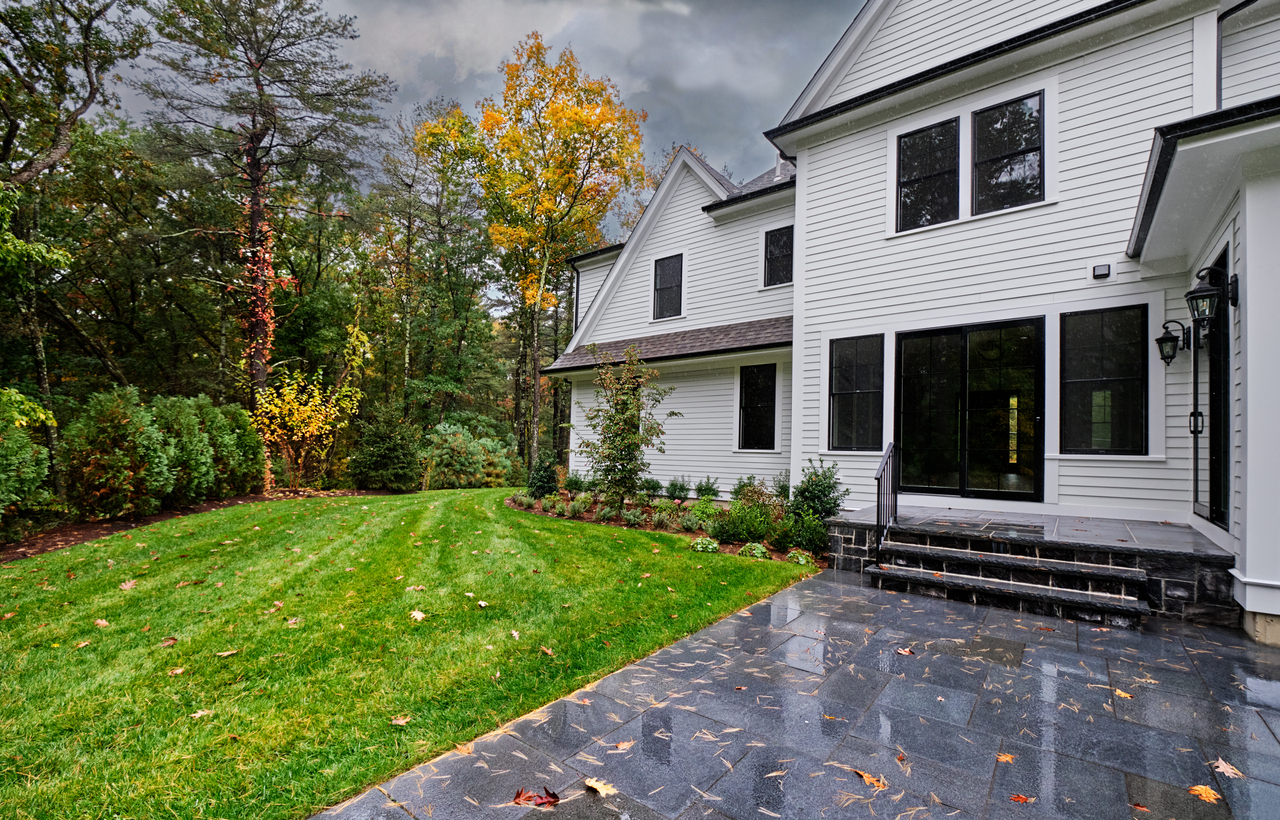
You walk around the corner of your Happy Valley home and find it.
One side looks noticeably worse than the others.
The paint has faded. A few joints look tired. Maybe there’s a small area where the coating is beginning to lift.
Then comes the expensive assumption:
“I guess we have to paint the entire house.”
Maybe.
But not necessarily.
One of the problems with treating exterior painting as a simple calendar-based maintenance job is that houses don’t age evenly. The four sides of your home can experience surprisingly different conditions.
When one elevation starts looking rough, the first question shouldn’t be, “What color are we repainting the house?”
It should be:
“Why is this side aging faster?”
Four Walls Can Have Four Different Lives
Think about what happens around a house over the course of a year.
One elevation gets strong afternoon sun.
Another spends much of the day shaded.
One side may be relatively open to airflow.
Another may sit beside a fence, retaining wall, or dense landscaping.
Add rooflines, gutters, decks, neighboring structures, and differences in elevation, and the exterior stops behaving like one uniform surface.
This can be especially noticeable around Happy Valley, where properties can vary considerably in slope and exposure.
That’s why our approach to residential exterior painting begins with inspecting the individual surfaces rather than assuming every wall is in identical condition.
Fading Isn’t the Same as Failure
This distinction can save homeowners a lot of unnecessary worry.
Paint can fade while still remaining well adhered.
A wall receiving more direct sun may lose some of its original color sooner than a protected elevation.
That doesn’t automatically mean the coating has stopped protecting the surface.
Now compare that with paint that’s:
- peeling
- flaking
- exposing bare material
- separating around joints
- failing alongside deteriorated caulking
That’s a different conversation.
A faded wall may be primarily an appearance issue.
A failing coating can become a maintenance issue.
Sometimes both happen together, but we don’t want to confuse the two.
The Ugly Side May Actually Be the Helpful Side
Here’s a different way to think about it.
The first wall showing deterioration may be giving you an early warning about the rest of the exterior.
Suppose a heavily exposed elevation has begun showing coating wear while the remaining sides still look good.
That doesn’t automatically mean the other three sides need immediate painting.
But now we know where the home’s exterior appears to be aging fastest.
That gives us something to compare.
How does the caulking look elsewhere?
Is the coating still firmly adhered?
Are there early signs of the same deterioration beginning on another elevation?
Or is the problem genuinely limited to one side?
The “bad” wall gives us a reference point.
Sometimes Localized Repair Really Is Localized
Imagine a small section beneath a window where paint has begun failing.
The rest of the elevation is sound.
The other three sides of the house are sound.
In that situation, we want to know why that particular section failed.
If there’s a localized condition contributing to the problem and the surrounding coatings remain healthy, the appropriate response may be much smaller than repainting the entire home.
That’s why North West Painting doesn’t want to turn every paint defect into the largest possible project.
A good inspection should help distinguish between isolated maintenance and broader coating failure.
But Spot Painting Has Limits
This is where the answer gets less convenient.
Just because a small repair is technically possible doesn’t mean it will disappear visually.
Exterior paint changes over time.
Sun exposure, weathering, age, and the original application can all affect how an existing color looks today.
Even if you have the original paint color, a freshly painted patch may not perfectly match a wall that has spent years outdoors.
That doesn’t necessarily make a localized repair wrong.
It means you should understand the tradeoff.
Sometimes the priority is protecting a vulnerable area, and a slight visual difference is acceptable.
Other times the homeowner wants a completely uniform appearance.
Those are different goals.
Happy Valley Elevation Changes Can Make Access Part of the Decision
The condition of the paint isn’t the only thing determining the scope.
Access matters.
On a relatively flat property, reaching one isolated wall may be straightforward.
On a sloped Happy Valley lot, that same wall could be the most complicated elevation on the house.
A backyard dropping away from the structure, retaining walls, landscaping, or multiple rooflines can all affect how exterior work is approached.
This is another reason square footage alone doesn’t tell us very much.
The smallest side of the house can sometimes require the most planning.
Look at the Joints Before You Look at the Color
If you’re trying to decide whether the problem is cosmetic or something more, move closer.
Ignore the color for a minute.
Look at the caulking and transitions.
Check around:
- windows
- doors
- corner boards
- trim
- penetrations
- material transitions
Are the joints still sealed?
Do you see separation?
Are there exposed edges?
A wall that has faded but remains intact tells us something different from a wall where multiple protective details are beginning to deteriorate at once.
The closer inspection is usually more useful than the view from the driveway.
This Is Also Why We Don’t Love “Paint Every X Years” Rules
Homeowners frequently search for a specific exterior painting interval.
It’s understandable.
A number makes maintenance easy.
If someone says repaint every certain number of years, you can put it on a calendar and stop thinking about it.
Unfortunately, your house hasn’t read that calendar.
Coating performance depends on too many variables:
surface preparation, previous coatings, exposure, materials, maintenance, architecture, and local conditions.
A house that’s still well protected doesn’t automatically need repainting because an internet article says its time is up.
And a vulnerable elevation shouldn’t necessarily be ignored because the house hasn’t reached some theoretical repainting age.
Condition is the better guide.
What Happens When More Than One Side Starts Showing the Same Symptoms?
Now the conversation changes.
Suppose we find deteriorating caulking on multiple elevations.
Paint is losing adhesion in several places.
Trim is showing wear around the house.
Previously isolated trouble is appearing repeatedly.
At that point, individual repairs may stop making sense as a long-term strategy.
The pattern suggests we’re no longer dealing with one unusual wall.
We’re looking at an exterior system reaching a broader maintenance point.
That’s where a full repaint may become the more practical approach.
The recommendation should follow the evidence, not precede it.
Decks Can Age Unevenly Too
The same thing happens on decks.
One section might receive intense afternoon sun while another sits beneath a covered area.
High-traffic boards can wear faster.
Areas beneath furniture may behave differently from exposed sections.
When evaluating deck and porch refinishing, we don’t assume every board has weathered identically just because they’re attached to the same structure.
Sometimes uneven wear can be addressed within a larger refinishing process.
The important part is recognizing the differences before choosing the approach.
Don’t Let One Bad Wall Panic You
There’s a tendency in home maintenance to jump from discovering a problem to imagining the largest possible repair.
Exterior paint doesn’t need that kind of drama.
If one side looks bad, inspect it.
Compare it with the other elevations.
Look closely at the coating.
Check the joints.
Consider sun, shade, landscaping, drainage, and exposure.
Then determine whether you’re looking at an isolated problem, uneven normal aging, or the beginning of broader coating failure.
That’s a much more useful process than assuming the entire house has suddenly reached the end of its paint life.
A Good Painting Estimate Should Be Willing to Say “Not Yet”
This is an important part of comparing house painters near you.
If you request an estimate because one wall concerns you, the contractor should actually inspect the rest of the house.
Maybe the full exterior needs attention.
Maybe it will soon.
Maybe it doesn’t.
An estimate becomes much more useful when someone can explain why they’re recommending the scope of work.
North West Painting offers competitive pricing, but our goal isn’t to create the biggest possible painting project from every inspection.
It’s to understand what the property needs and provide a free quote based on that work.
You can learn more about North West Painting and our painting services throughout Happy Valley, Portland, Gresham, and surrounding communities.
If one side of your home has started looking dramatically different from the others, contact North West Painting for a free quote.
We’ll look at the problem area, compare it with the rest of the exterior, and help determine whether you’re dealing with one troublesome wall or a house that’s genuinely ready for a larger project.
Sometimes one bad side means it’s time to paint everything.
Sometimes it just means we need to figure out what’s happening on that side.
Knowing the difference is the valuable part.