
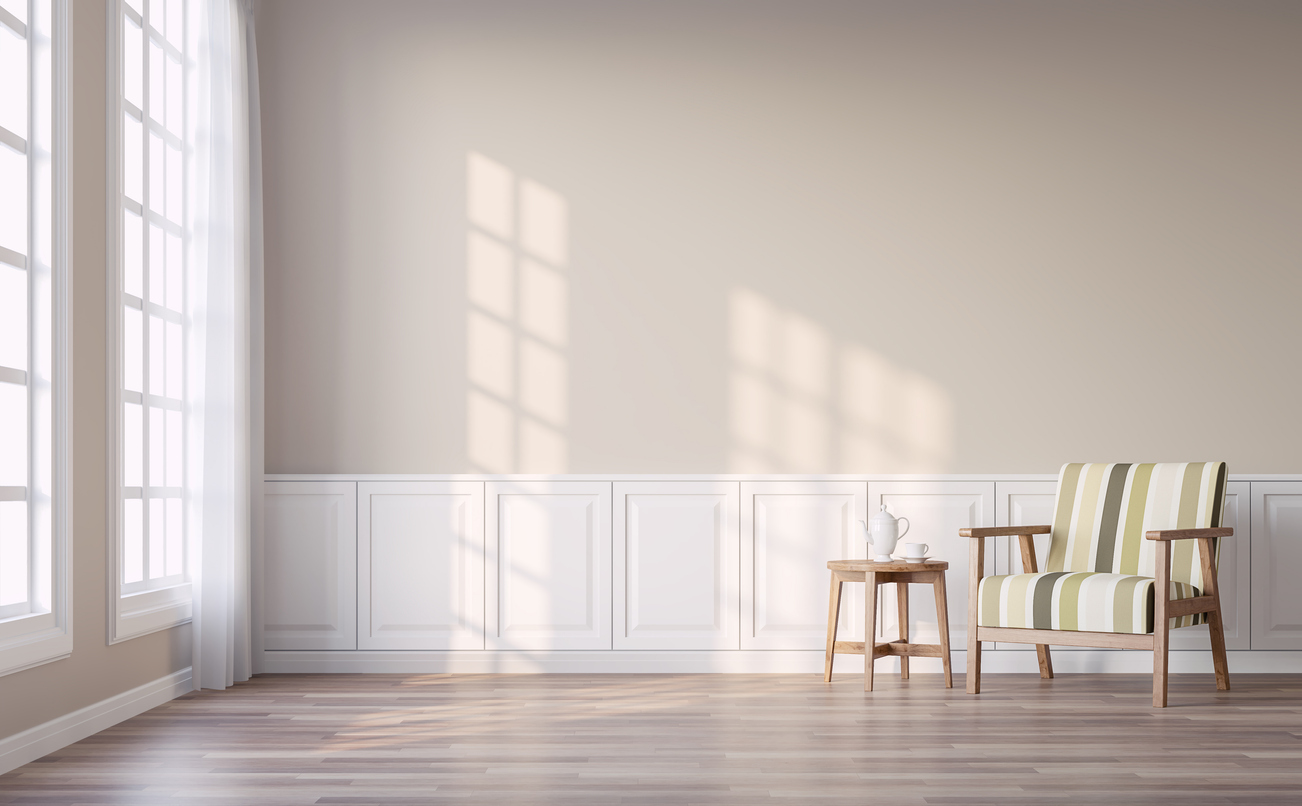
You spend days choosing the right paint color.
The sample looks great in the store.
It looks good on the wall Saturday afternoon.
The room gets painted, you walk back in that evening, turn on the lights—and wonder if you’ve made a terrible mistake.
The warm beige suddenly looks yellow.
The soft gray has picked up an unexpected blue or green cast.
The white that looked clean and bright during the day now seems creamier than you remember.
Nothing happened to the paint between 3 p.m. and 7 p.m.
What changed was the light.
This becomes especially noticeable around Lake Oswego and the Portland metro during fall, when daylight hours shorten and homeowners start seeing their interiors under artificial light for much more of the day.
Before blaming the paint color, look at what’s illuminating it.
The Paint Chip Is Only Half the Decision
Color doesn’t exist in isolation.
You see it because light hits a surface and reaches your eyes.
Change that light, and your perception of the color can change too.
This is why selecting interior paint exclusively from a small sample card under store lighting can be risky.
A color needs to work in your house.
That means seeing it alongside your flooring, furniture, cabinets, trim, countertops, and—most importantly—the lighting you actually use.
When we’re discussing residential interior painting, color selection isn’t just about asking which shade looks attractive.
We want homeowners to consider where that color is going to live.
October Changes Portland Interiors
Think about how you used your living room in July.
At 7 p.m., there could still be plenty of natural light coming through the windows.
By late October, that same room is likely relying much more heavily on lamps and ceiling fixtures.
The room hasn’t changed.
Your relationship with it has.
A wall color you selected primarily under summer daylight may suddenly spend most of your waking evening hours beneath artificial lighting.
That’s one reason fall is such an interesting time to choose interior colors.
You’re seeing the house under the conditions you’ll actually experience throughout much of the coming season.
A North-Facing Room and a West-Facing Room Are Not the Same Canvas
Window orientation can dramatically change how a color behaves throughout the day.
A room with limited direct sunlight may maintain a cooler, more consistent quality.
A room receiving strong late-afternoon light can transform as the day progresses.
Then sunset arrives, the lamps come on, and the entire color relationship changes again.
Lake Oswego homes also vary enormously in window size, tree cover, floor plans, and surrounding structures.
A large open room with extensive windows is not going to experience color the same way as a smaller room shaded by mature trees.
That’s why “this color looks great in my friend’s house” isn’t particularly reliable advice.
Your friend’s paint isn’t living in your light.
Your Light Bulbs May Be Changing the Color More Than You Think
This is where homeowners sometimes start blaming the painter.
“The wall looked gray this afternoon. Why does it look beige now?”
Look at the bulbs.
Artificial lighting can lean warmer or cooler, and that shift influences how nearby colors appear.
Warm lighting can emphasize warm undertones.
Cooler lighting can make some colors feel sharper or reveal undertones you didn’t notice in daylight.
This becomes especially important with subtle neutrals.
A dramatic navy wall is still going to look navy.
But colors living near the boundaries between gray, beige, cream, green, and blue can be surprisingly sensitive to their environment.
That’s why we’d rather have you discover that during sampling than after an entire room has been painted.
White Paint Is Where People Really Get Tricked
“Just paint it white.”
That sounds like the simplest possible interior painting decision.
Then you start looking at whites.
Some lean warm.
Some feel cooler.
Some appear crisp beside one trim color and unexpectedly creamy beside another.
Put the same white beside warm wood floors, a stone fireplace, cool countertops, and different artificial lighting, and it can appear to shift around the room.
This is why selecting white by name alone can be frustrating.
A “pure” or “clean” sounding color name doesn’t tell you how it will interact with the actual house.
Sample it.
And don’t judge it at only one time of day.
Don’t Paint Five Tiny Squares Next to Each Other
This is another common mistake.
You buy several samples and paint five small rectangles shoulder-to-shoulder.
Now you’re not really evaluating each color in the room.
You’re evaluating each color against four competing colors.
A warmer sample can make the one beside it look cooler. A darker color can make the adjacent option appear lighter.
The comparison becomes noisy.
Larger sample areas—or movable sample boards when appropriate—can make it easier to see how a color behaves independently.
Move the sample around.
Look at it near the window.
Then across the room.
Then under your evening lighting.
You’re not being indecisive.
You’re gathering useful information.
Sheen Changes the Conversation Too
Color isn’t the only thing affecting what you see.
Finish matters.
Different sheens interact with light differently.
A surface reflecting more light can make imperfections, texture, and changing illumination more noticeable than a flatter finish.
That becomes important when you’re painting older walls or spaces with strong directional lighting.
The “best” sheen isn’t simply the shiniest or the flattest option.
It depends on the room, surface, desired appearance, and practical needs.
Kitchens and high-use areas may have different considerations from bedrooms or ceilings.
Professional interior painting should account for how the room is actually used.
The Kitchen Is Especially Unforgiving
Kitchens combine almost every variable we’ve discussed.
Natural light.
Under-cabinet lights.
Ceiling fixtures.
Cabinet colors.
Countertops.
Backsplashes.
Flooring.
Stainless steel.
Wood.
A wall color that looked neutral in isolation can suddenly reveal an undertone when placed beside the cabinets.
The reverse happens too.
Changing the cabinet color can alter how the existing walls appear.
That’s why homeowners considering cabinet painting and refinishing should think about the whole room rather than choosing the cabinet color as though nothing else exists.
Cabinets occupy too much visual space for that.
Open Floor Plans Create a Different Problem
An open floor plan can expose one color to several lighting environments at once.
The same wall color might travel from a bright living area into a darker hallway and then toward a kitchen with entirely different artificial lighting.
Now the challenge isn’t choosing a color that looks perfect from one position.
It needs to make sense throughout the connected space.
Sometimes that means embracing the fact that the color will shift.
A paint color doesn’t need to look identical every hour of the day to be successful.
In fact, some of the most interesting colors don’t.
The goal is making sure you like the range of appearances rather than only the version you saw on the sample card.
What If the Room Has Already Been Painted?
Don’t panic on the first evening.
Freshly painted rooms can feel dramatically different simply because you’ve spent years looking at the previous color.
Give yourself a chance to see the new finish under morning light, midday conditions, cloudy weather, and your normal evening lighting.
Also look at the entire room once everything is back in place.
Furniture, rugs, curtains, artwork, and other materials can change the visual balance considerably.
An empty freshly painted room isn’t necessarily the room you’re going to live in.
If the color consistently bothers you under the lighting you use most, that’s different.
But don’t make the decision based on one strange hour after sunset.
Test Paint When You Actually Live in the Room
This is probably the most useful rule.
If you spend most of your time in the living room at night, don’t select its paint color exclusively at noon.
If your kitchen is busiest early in the morning, look at samples then.
If you’re painting a home office where you work throughout the day, check the color as the natural light changes.
Your paint should work for your routine, not for the ten minutes when the room receives perfect photography light.
A Better Color Decision Starts Before Painting Day
North West Painting works on interior and exterior projects throughout Lake Oswego, Portland, Gresham, and surrounding communities. You can learn more about North West Painting and the painting services we provide.
If you’re planning an interior update this fall, contact North West Painting for a free quote. We offer competitive pricing based on the actual surfaces and scope of your project.
And before you commit to that perfect gray, white, green, or beige, do one more thing.
Turn the lights on.
If you’re going to spend half the year seeing the room after sunset, that’s the version of the color that deserves a vote too.