
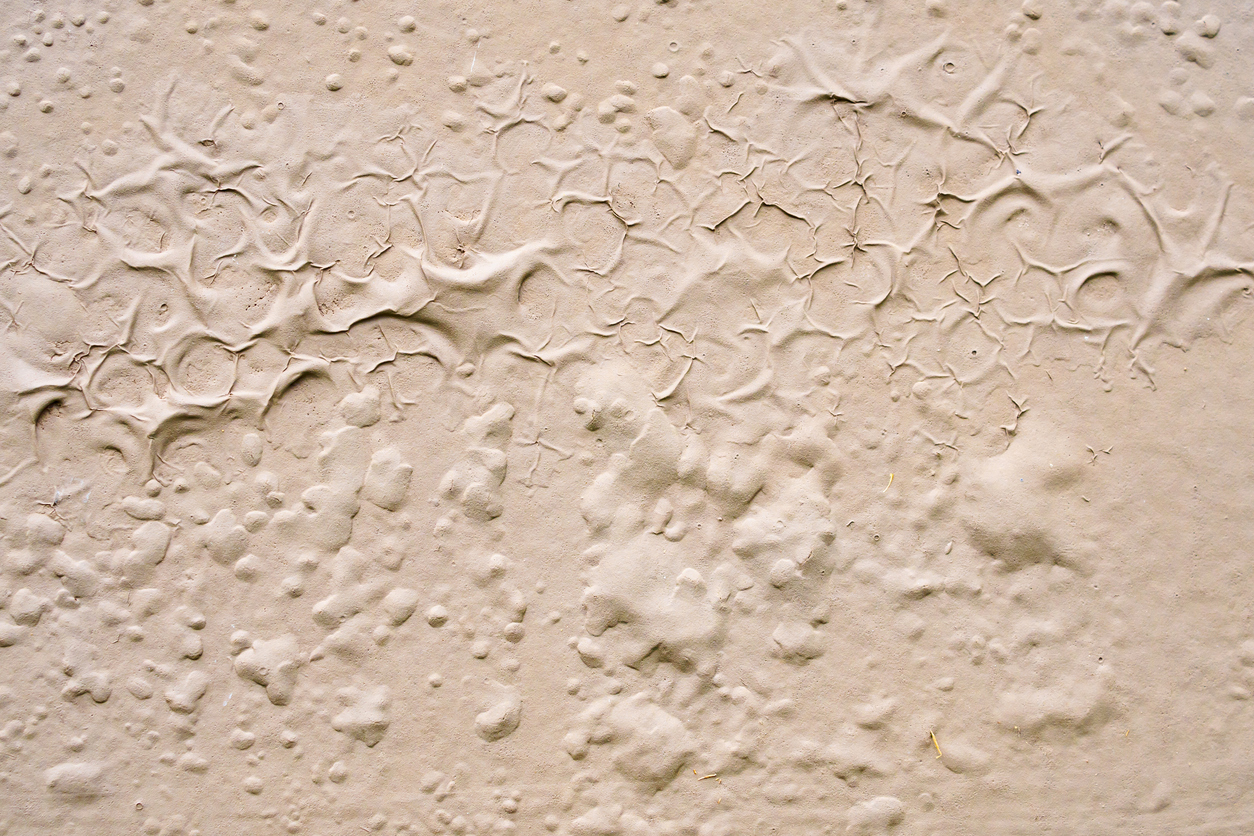
There is a big difference between seeing peeling paint and understanding peeling paint.
Imagine walking around your Portland home and finding one patch of siding where the coating is beginning to lift.
Three feet to the left, everything looks fine.
The trim above it looks fine.
The other side of the house looks fine.
So why is the paint failing in that exact spot?
That’s one of the first questions worth asking, because peeling paint isn’t really a diagnosis. It’s evidence.
Something happened there.
Before simply scraping it off and putting new paint over the area, we want to know what made that particular section behave differently from everything around it.
Start With What Is Directly Above the Peeling Paint
This is one of the simplest things a homeowner can check.
Look up.
Is there a window above the damaged area?
A gutter?
Roofline?
Piece of trim?
Downspout?
Exterior penetration?
Sometimes the location of the failure gives us our first useful clue.
If water repeatedly reaches one small section of siding because of drainage or another exterior condition, painting the damaged area without addressing the source won’t accomplish much.
The new coating might look excellent initially.
But if the same condition continues, you’ve created an opportunity for the same problem to return.
That’s why our approach to residential exterior painting involves evaluating the surface before deciding what preparation makes sense.
We don’t want to simply cover evidence.
We want to understand it.
Now Look Down
The next clue may be below the peeling area rather than above it.
How close is the siding to the ground?
Is there dense landscaping against the house?
Does irrigation regularly hit the wall?
Does rain splash soil or mulch back onto the lower siding?
A failure concentrated near the bottom of an exterior wall tells a different story than paint deteriorating high on a sunny elevation.
This is where a generic diagnosis like “old paint” becomes less useful.
Old paint doesn’t necessarily choose one small patch beside a shrub.
When deterioration is concentrated, we start looking for concentrated conditions.
What Direction Does the Wall Face?
Now things get more interesting.
Suppose the peeling is happening across a larger section rather than one isolated patch.
Look at the wall’s exposure.
A Portland house can have one elevation receiving substantial afternoon sun while another spends much of the day shaded.
Those walls don’t experience the same conditions.
Repeated heating can place stress on coatings and sealants. A shaded wall, meanwhile, may dry more slowly after wet weather.
Neither sun nor shade automatically means paint will fail.
But the pattern helps us investigate.
If the most exposed wall is deteriorating while protected elevations remain healthy, weather exposure becomes part of the conversation.
If the trouble is concentrated on a heavily shaded side, we start looking more closely at moisture, airflow, surface contamination, and nearby vegetation.
The house is giving us clues.
Sometimes the Problem Is Under the Paint
Here’s where diagnosing peeling becomes harder.
The current paint job might not be the original problem.
Imagine an older Portland home that has been repainted several times.
The newest coating can only perform as well as the surface beneath it allows.
If a previous layer wasn’t properly prepared, eventually you may see failure occurring between coatings.
From the ground, it looks like the newest paint is peeling.
Up close, we may discover that the new coating is still firmly attached to an older layer—and that older layer is what’s releasing.
That’s a very different situation from simple surface wear.
It also explains why preparation matters so much.
Scraping, sanding, cleaning, priming, and properly preparing unstable areas aren’t glamorous parts of a painting project.
They’re often the parts determining how well the finished work performs.
A Previous Shortcut Can Take Years to Reveal Itself
This is one reason we’re careful about blaming every paint failure on the current coating.
A shortcut taken years ago can remain hidden for a surprisingly long time.
Perhaps a surface wasn’t cleaned properly.
Maybe loose material wasn’t fully removed.
Maybe a bare area wasn’t treated appropriately before finish coats were applied.
The house can look good for quite a while.
Then one section begins releasing.
Homeowners naturally think:
“Why is my paint suddenly peeling?”
But the conditions leading to that failure may have been established during the previous paint job.
That’s why North West Painting focuses on what the existing surface requires rather than treating preparation as an identical checklist on every property.
What If It’s Only the Trim?
That’s another clue.
Suppose the siding looks excellent but paint is failing on window trim.
We wouldn’t automatically conclude that the entire exterior has reached the end of its useful life.
Trim can experience different conditions from siding.
Horizontal edges can collect moisture differently. Joints can open. End grain and detailed areas can become vulnerable. Some trim receives more concentrated weather exposure than the broad wall surrounding it.
This is why one peeling section doesn’t automatically mean:
“Paint the whole house.”
Sometimes a localized problem is exactly that—localized.
The useful question is whether the problem is truly isolated or simply the first visible evidence of broader deterioration.
Peeling Around a Window Deserves a Closer Look
Windows are particularly interesting because several materials and joints come together in a relatively small area.
You have siding.
Trim.
Caulking.
Painted edges.
And the window assembly itself.
If paint failure repeatedly appears beneath one window while nearby areas remain sound, that pattern deserves investigation.
Painting over the peeling section may improve the appearance.
It doesn’t explain the pattern.
A good exterior assessment should.
What About Paint That’s Bubbling Instead of Peeling?
Bubbling can make homeowners want to immediately pop the blister.
Try not to.
The intact blister may help a painter understand what’s happening.
There can be different reasons coatings blister or lose adhesion, and the surrounding conditions matter.
Where is the blister?
How widespread is it?
What’s underneath?
Is it concentrated around one architectural feature?
Does it appear on a sun-exposed surface?
Are other coatings releasing nearby?
Instead of assuming every bubble has the same cause, we want to look at the evidence around it.
Portland’s Weather Makes Preparation Especially Important
Our climate isn’t difficult because it rains every minute.
It doesn’t.
The challenge is the repeated cycle.
Wet.
Dry.
Cool.
Warm.
Shade.
Sun.
Then another long period of moisture.
A properly maintained exterior is designed to handle those changes.
But once water finds vulnerable areas or a coating begins losing adhesion, repeated seasonal exposure can turn a small maintenance issue into a larger preparation job.
That is why October is a useful time to pay attention.
The transition from dry summer conditions into Portland’s wetter months can make weak areas easier to spot.
Don’t Forget the Deck
You can apply the same detective work to a failing deck finish.
If one section of a deck coating is deteriorating much faster than another, ask why.
Does it receive more sun?
Is it beneath a roof edge?
Does water collect there?
Is that section shaded?
Is the wear concentrated in a traffic path?
Professional deck and porch refinishing should take those differences into account.
If we don’t understand why one area deteriorated first, simply applying another finish doesn’t tell us whether we’ve addressed the real issue.
When Peeling Paint Becomes a Commercial Problem
The same principle applies to commercial buildings.
Imagine a Portland storefront with peeling concentrated around one entrance.
That’s different from uniform fading across the entire facade.
Perhaps the entrance receives more weather.
Maybe the problem is concentrated around trim or another building detail.
A commercial exterior painting assessment should distinguish between widespread coating deterioration and a localized failure.
That can affect both the recommended work and the project scope.
Don’t Diagnose Your House From an Internet Photo
There are plenty of pictures online showing “moisture damage,” “UV damage,” “bad preparation,” and other paint problems.
They can be useful examples.
They aren’t your house.
Several different failures can look similar in a photograph, particularly once paint has already begun peeling.
The location and surrounding conditions matter.
That’s why seeing the property in person is so useful.
We can look at what failed, what didn’t, and what is different about that particular area.
The Most Useful Question Isn’t “Can You Paint Over This?”
Technically, almost any ugly spot can be made to look better temporarily.
That’s not a very high standard.
A better question is:
Why did it fail?
Once we understand that, we can determine what preparation is appropriate and whether the problem appears localized or part of a larger exterior maintenance need.
North West Painting offers competitive pricing, but we don’t believe an estimate should be based solely on how many square feet need color.
Condition matters.
Preparation matters.
And the reason behind a failure matters.
You can learn more about North West Painting and our residential and commercial painting services throughout Portland and the surrounding metro area.
If you’ve found peeling, bubbling, or another suspicious patch on your home, contact North West Painting for a free quote.
We’ll look at the actual surface and help determine what the house is telling us before deciding what the painting project should become.
Because the most important thing about a patch of peeling paint isn’t that it’s peeling.
It’s why that particular patch failed when everything around it didn’t.